





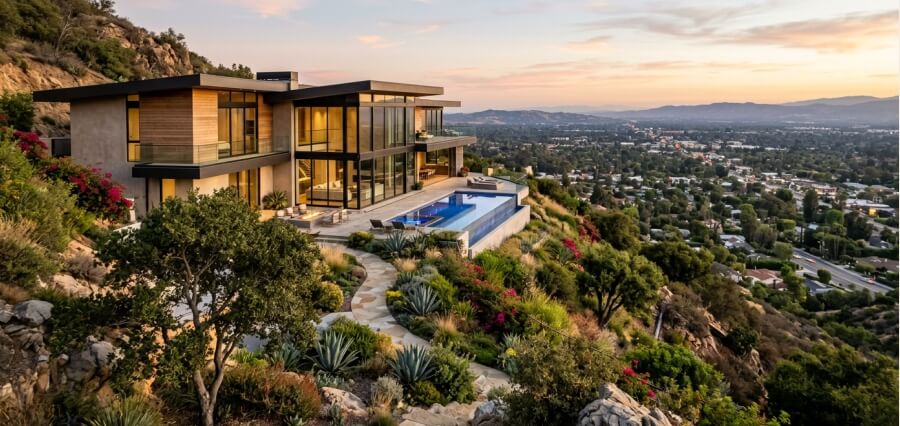
The meaning of home has changed dramatically in recent years. Buyers are no longer looking only for location, size, and price. They are also thinking about comfort, health, efficiency, privacy, flexibility, and how a home supports daily life.
Across major real estate markets, especially in lifestyle-driven cities like Los Angeles, residential demand is increasingly shaped by two powerful forces: smart technology and wellness-focused living.
A modern home is no longer just a place to live. It is a place to work, recharge, entertain, raise a family, protect privacy, and support a better quality of life.
Buyers Want Homes That Support Daily Well-Being
Wellness has become one of the most important lifestyle priorities for many homeowners. This does not always mean luxury spas or dramatic architectural features. Often, it begins with the basics: natural light, clean air, quiet interiors, outdoor space, thoughtful layouts, and a sense of calm.
Homes that feel bright, open, and peaceful can create a stronger emotional response during showings. Buyers may not always describe it in technical terms, but they often know when a property feels healthy and comfortable.
In Los Angeles neighborhoods such as Glendale, Studio City, Sherman Oaks, Encino, Toluca Lake, and Calabasas, buyers often look for properties that offer a balance between city access and personal retreat. A home that provides privacy, greenery, flexible space, and indoor-outdoor flow can stand out quickly.
Smart Home Features Are Becoming Expected
Technology is no longer a bonus in many homes. It is becoming part of the standard buyer expectation.
Features such as smart thermostats, security systems, video doorbells, energy-efficient lighting, automated shades, EV charging readiness, and app-controlled climate systems can add convenience and perceived value.
For some buyers, especially younger professionals and families, smart home features make a property feel more current and easier to manage. For luxury buyers, they can support privacy, comfort, and efficiency.
However, technology alone does not create value. The best smart home features are those that improve daily living without making the home feel complicated. Buyers want convenience, not confusion.
The Rise of Flexible Living Spaces
One of the biggest shifts in residential real estate is the demand for flexible spaces.
Today’s buyers often want rooms that can serve multiple purposes. A guest bedroom may also function as a home office. A garage may become a gym or creative studio. A formal dining room may be used as a workspace, playroom, or media area.
This flexibility matters because modern lifestyles are less predictable than before. People work from home, run businesses remotely, host guests, care for family members, and spend more time inside their homes.
In competitive real estate markets, properties that offer adaptable layouts often appeal to a wider range of buyers.
Indoor-Outdoor Living Remains a Major Advantage
In Southern California, indoor-outdoor living continues to be one of the strongest lifestyle features a home can offer.
Patios, balconies, courtyards, gardens, pools, outdoor kitchens, and shaded seating areas can significantly influence buyer interest. These spaces support wellness, entertaining, relaxation, and the California lifestyle many buyers are seeking.
Even a small outdoor area can become a meaningful selling point if it is presented well. A private patio with thoughtful landscaping may be more memorable than a larger but poorly designed yard.
For sellers, this means outdoor spaces should not be treated as an afterthought. They should be staged and marketed as an extension of the home.
Energy Efficiency Is Becoming More Important
As utility costs and environmental awareness continue to influence buyer decisions, energy-efficient features are becoming increasingly valuable.
Buyers may pay attention to:
- Updated windows
- Solar potential
- Efficient HVAC systems
- Smart thermostats
- Insulation quality
- LED lighting
- Water-conscious landscaping
- EV charger compatibility
While not every buyer prioritizes sustainability equally, many appreciate homes that feel more efficient and future-ready.
In markets where buyers compare multiple properties, these features can help a home feel more practical and responsible.
Local Lifestyle Still Drives the Final Decision
Even with wellness features and technology, location remains central to real estate decisions. The difference is that buyers now evaluate location through a lifestyle lens.
They want to understand how a neighborhood will support their routines. Is it close to parks, cafés, schools, studios, hiking trails, shopping, or major work centers? Does it feel quiet or energetic? Is it better for entertaining, family life, privacy, or convenience?
This is especially important in Los Angeles, where nearby neighborhoods can offer very different lifestyles. Beverly Hills, Burbank, Glendale, Encino, Sherman Oaks, Studio City, and Toluca Lake each attract buyers for different reasons.
For buyers and sellers navigating these lifestyle-driven decisions, local guidance matters. Tooyn Homes provides a boutique real estate experience focused on neighborhood knowledge, thoughtful marketing, and helping clients make confident decisions in the Los Angeles market.
Sellers Should Highlight More Than Features
A common mistake in real estate marketing is listing features without explaining their lifestyle value.
For example, a smart thermostat is not just a device. It represents comfort and energy control. A backyard is not just outdoor space. It represents relaxation, entertaining, and privacy. A home office is not just an extra room. It represents flexibility and productivity.
Successful marketing connects features to benefits.
Instead of simply saying a property has large windows, strong marketing should communicate natural light, openness, warmth, and atmosphere. Instead of only mentioning a remodeled kitchen, it should show how the space supports gathering, hosting, and daily living.
Buyers respond more strongly when they can imagine how a home will improve their life.
Wellness and Technology Work Best Together
The strongest modern homes often combine wellness and technology naturally.
A property with smart climate control, abundant natural light, quiet bedrooms, security features, efficient systems, outdoor space, and flexible rooms can feel both comfortable and future-ready.
This combination appeals to buyers because it supports real daily needs. It offers convenience without sacrificing warmth. It offers modern function without losing emotional appeal.
In many cases, the best homes are not the most complicated or the most heavily upgraded. They are the homes that feel intuitive, balanced, and easy to live in.
The Future of Real Estate Is Human-Centered
Technology will continue to influence residential real estate, but the most important factor will remain human experience.
Buyers want homes that support health, comfort, privacy, productivity, and connection. Sellers who understand this shift can position their properties more effectively. Agents who understand both market data and lifestyle psychology can create stronger outcomes for their clients.
The future of real estate is not only about smarter homes. It is about homes that help people live better.
As buyers become more selective, properties that combine thoughtful design, wellness, technology, and neighborhood lifestyle will continue to stand out in competitive markets.