



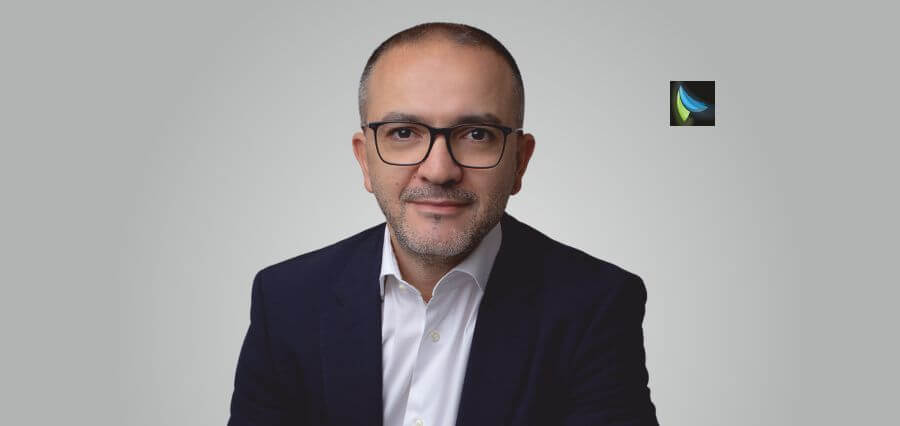

Global fintech executive Henry Chen knows the conference circuit well. He has spent years meeting with leaders and blockchain professionals across the world, including in major financial and tech hubs like Hong Kong, New York and San Francisco.
“Each city is looking at the future of blockchain and digital assets through a slightly different lens,” Chen said.
What separates Chen from most of the crowd is what he does once the lights come up. He is on a mission to create long-term opportunities for founders, investors, developers and institutions. He believes the industry moves faster when those groups collaborate instead of operating in silos.
Henry Chen Kucoin is a 15-year veteran of investment banking and digital asset markets. He held senior roles at Goldman Sachs, UBS, Summer Capital and KU Holdings Group before founding Swiss Digital Labs, an advisory firm that helps crypto ventures, blockchain foundations and fintech companies build cross-border partnerships.
More recently, he took on a second role as chief business officer of SNZ Holding, where he helped stand up ETH Hong Kong Hub, Asia’s first permanent physical home for the Ethereum community. That dual vantage point – dealmaker and community builder – has put him inside dozens of events this year and sharpened his read on how differently each city approaches the same technology.
Hong Kong is building regulated, institutional-grade infrastructure and using policy to pull serious builders and capital into a long-term ecosystem, Chen said, while also pushing hard on smarter payment networks and inclusive finance as the region’s fintech hub. New York filters the same technology through global capital markets, compliance and product structuring. San Francisco remains the place where the most experimental ideas take shape first, shaped by Silicon Valley’s product culture and its current fixation on agentic and decentralized AI.
“What stands out across all three cities is that on-chain finance increasingly looks like the next generation of fintech,” said Chen, an ecosystem connector whose work extends well beyond conferences and speaking engagements.
“The infrastructure is still at an early stage, but the direction is clear.”
Spotting that pattern across three cities is the easy part for Chen. The harder work, he explains, starts after the panel ends and the room clears out.
Building the Room, Not Just Attending It
Henry Chen’s clearest example of that after-the-panel work sits in West Kowloon, where ETH Hong Kong Hub officially opened in April 2026.
The event was billed as Asia’s first permanent physical home for the Ethereum community. The hub is backed by the Ethereum Foundation’s Ethereum Everywhere team and co-operated by SNZ Holding and ETHTAO. Its grand opening drew more than 1,500 registrants, including Ethereum co-founder Vitalik Buterin, Ethereum Foundation President Aya Miyaguchi and Hong Kong Legislative Council member Duncan Chiu.
However, Chen said the opening was never the point. It was proof of demand for something conferences cannot provide.
“In-person gatherings are where the most meaningful insights emerge unexpectedly,” Chen said. “Informal conversations reveal where capital is moving, where founders are adjusting their strategies, and where institutions are becoming more engaged. That cannot be replicated through online commentary alone.”
In an industry where attending panels and appearing at conferences often gets mistaken for contribution, Chen said he wanted to build something with more staying power than a single event.
The hub’s first major programming session was held in March 2026, a month before its official grand opening. The event brought together speakers from the Ethereum Foundation, Spark, Hubble AI, Unified Labs and Asseto Finance for sessions on artificial intelligence, real-world assets and decentralized finance. Its inaugural membership now spans more than 30 ecosystem participants, from protocol developers to institutional investors exploring on-chain markets for the first time.
“Online discussions are useful for speed and reach,” Chen said. “But in-person events provide a much clearer read on conviction, seriousness, and intent. Face-to-face conversations reveal whether people are genuinely building, whether an institution is truly committed, and whether a market theme has real depth behind it.”
Henry Chen Kucoin: ‘It Signals That The Industry Is Entering A More Structural Phase’
Henry Chen believes in substance over spectacle; in fact, it drives how he talks about real-world asset tokenization, a theme that has dominated recent RWA Day sessions and ETHConf discussions across the industry.
During his tenure overseeing capital markets and RWA business development at KU Holdings Group, Chen built a pipeline spanning money-market funds, private equity, commodities and yield-bearing stablecoins – designing paths from origination through private placement and exchange listing. That experience taught him where tokenization efforts tend to stall, and what it takes to push past the stall point.
“Early tokenization efforts often stopped at issuance,” Chen said. “Now the work is about making these assets tradeable, auditable, and usable as collateral across both CeFi and DeFi.”
He said the industry only crosses into practical implementation once institutions structure products that fit inside existing legal and risk frameworks, rather than treating compliance as an afterthought bolted on at the end.
“When large asset managers and banks commit real resources to these products, it changes the conversation from ‘if’ to ‘how’ and ‘when,'” Chen said.
That shift, Chen said, tends to surface in the same kind of unhurried, follow-up conversations that define his approach to events generally.
“When asset managers, banks, exchanges, and Web3 builders are discussing how to bring traditional assets on-chain, how to design sustainable yield and liquidity models, and how to make user experience and compliance work at scale, it signals that the industry is entering a more structural phase,” he said.
Where AI, Capital and Discipline Meet
Henry Chen Kucoin has also watched artificial intelligence move from a side conversation to a headline topic at nearly every gathering he attends, and he has resisted treating it as a separate track from blockchain.
“AI improves productivity, while blockchain upgrades how the economic system interacts and operates by making ownership, incentives, and coordination more transparent and programmable,” Chen said.
That framing carries over into how he evaluates the founders and projects he meets on the circuit. Chen said the market has grown less patient with narrative alone, and the projects that earn real attention from experienced investors share a common thread.
“The strongest opportunities usually emerge where strategy, timing, and real-world utility align,” Chen said. “The projects that stand out usually feel inevitable, not fashionable.”
He applies the same discipline to his own investment philosophy at SNZ, where he said the firm avoids chasing short-term trends in favor of backing harder, longer-term bets.
“The philosophy has always been to back the hard but right thing for the long term,” Chen shared. “We are not looking to trade around trends. We are most interested in real applications on-chain, whether in fintech, payments, AI, content, or other use cases that can create lasting value.”
What Comes Next For Global Executive Henry Chen
Henry Chen’s next chapter looks less like a speaking tour and more like a construction project. He wants to spend the coming years working directly alongside founders rather than advising them from a distance, helping translate technical ideas into products people actually use and helping institutions move past curiosity into active participation.
“The goal is not simply to invest in founders from a distance, but to work with them as a true partner and co-builder,” Chen shared. “Founders often need more than capital. They need confidence that their ideas can actually materialize without unnecessary trial and error.”
That mindset is already visible in West Kowloon, where ETH HK Hub’s success will not be measured by its opening-night guest list but by what happens on an ordinary Tuesday months from now.
Chen said the real test is whether founders keep coming back, whether developers find collaborators and whether institutions grow more comfortable engaging with on-chain finance because they now have a consistent place to do it.
The panels will keep happening in Hong Kong, New York and San Francisco. The badges will keep coming off at the end of the night. For Chen, that has never been where the story ends.
It is where his part of it begins.
“Having everyone together also accelerates decision-making,” Chen explained. “Instead of ideas bouncing around in isolation for months, stakeholders can test assumptions in real time, build trust more quickly, and identify where collaboration is actually feasible. It is also increasingly important to bring the right people together not for pure social interaction, but for business collaboration. The market is becoming much more result-driven, so the value of the room lies in whether it helps create real partnerships, real execution, and real outcomes.”