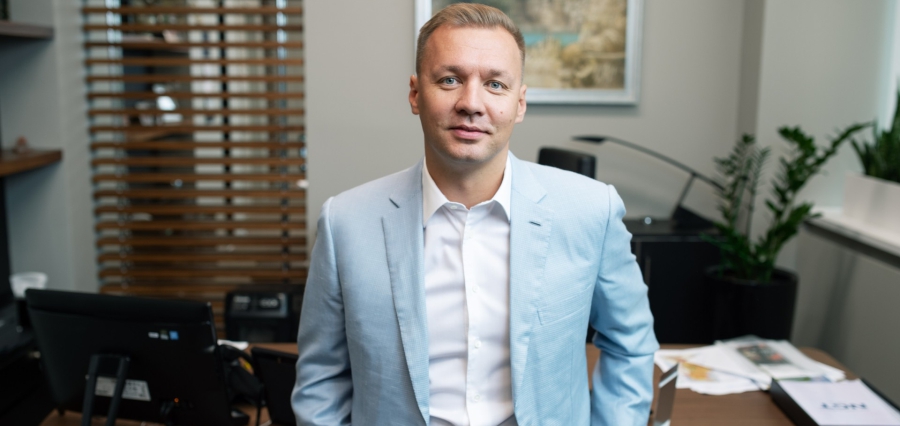
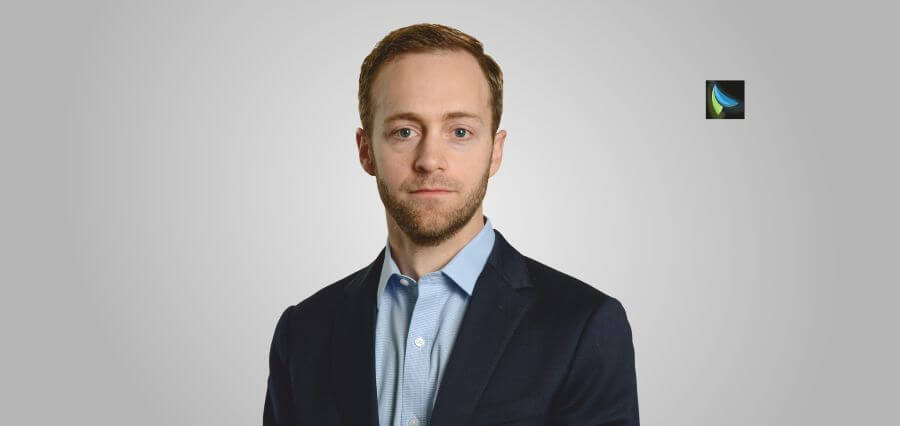


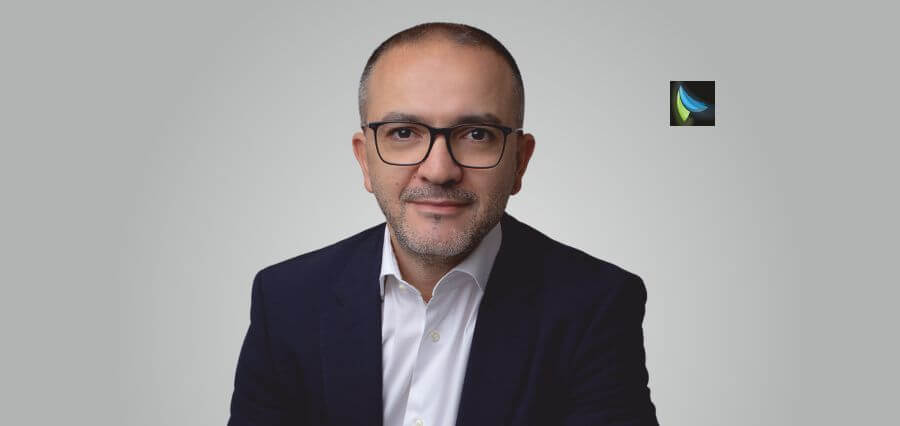

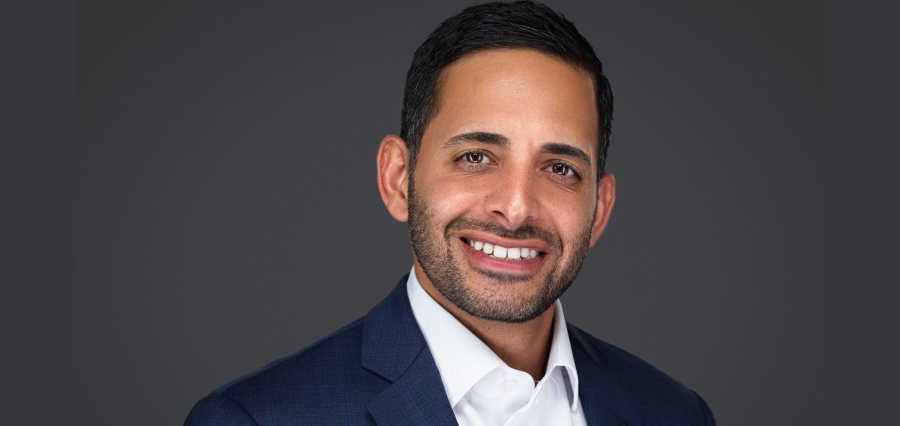
Few consultants arrive at business consulting through public health. Nicholas Mukhtar did. After founding Healthy Detroit in 2013, growing it to a $15 million annual budget, and earning recognition from the American Public Health Association as the National Public Health Organization of the Year in 2017, he shifted focus — first to advising government offices and congressional leaders through Healthy Communities, LLC, then to building Tera Strategies, his Fort Lauderdale-based management consulting firm, where he now advises CEOs, family offices, medical directors, and wealth management practices nationwide.
That career arc, from community health organizer to senior business consultant, has given Nicholas Mukhtar a cross-sector lens that surfaces patterns other advisors tend to miss. He sat down to answer five questions on the state of business leadership, what governance structures actually require, and where most executives lose their way before they realize it.
Q1: You transitioned from leading a major nonprofit to advising private-sector executives. What does one world teach you about the other?
Mukhtar says the mechanics of both worlds are more similar than most people expect. Running Healthy Detroit showed him that whether the organization is a city park health initiative or a family-owned company, the core problems are almost always structural, and the transition from scrappy startup to functioning institution is a universal challenge. “I look at companies in two different buckets,” he said. “One are these large established companies that do function much like these big city governments or these bureaucratic machines that sometimes can’t get out of their own way. And then this other bucket, it’s the startup machine.”
He draws a direct line between what he observed building a public-private partnership model in Detroit — where government bureaucracy consistently blocked innovation — and what he encounters inside large corporations today. His consulting approach reflects that framework: different organizations require fundamentally different interventions, and treating them the same is one of the more expensive mistakes a leader can make. The observation carries weight against current data. A 2025 NACD survey of directors found that a majority of board members flagged improvements to planning oversight and risk management as top priorities, signaling that even at the governance level, organizations are grappling with the gap between stated direction and execution capability.
Q2: You work extensively with family offices on governance and succession. What is the single biggest mistake you see them make?
Mukhtar’s answer is consistent across nearly every family office engagement he takes on: not getting children involved early enough. The consequences, when they surface, tend to be severe. “You don’t know what life has in store,” he said. “You’ll see situations where someone will pass on or there’ll be an accident or something, and these kids truly have no idea what their parents have built, how they built it, how things are set up, what to do.”
The scale of the problem is considerable. According to a 2025 report from RBC Wealth Management and Campden Wealth, nearly half of all family offices expect a generational transition within the next decade, yet only 69% now have a formal succession plan in place, up from just 53% the previous year. Research published by Simple, a family office advisory firm, found that without a defined decision-making framework, families become dangerously dependent on one or two individuals, and when those individuals are suddenly unavailable, the organization has no structure to fall back on. The clients Mukhtar describes getting it right start their children with small investment accounts as early as age ten or eleven. “Just teaching them the value of having time in the market, saving money, creating buckets,” he said. “Put 30% here, put 30% here, put 30% here.” The families that struggle, in his experience, are the ones so consumed by building that they lose sight of who they are building for.
Q3: When a new client comes to you, what is the root problem you find most often — and what question do you wish they had asked themselves before picking up the phone?
Mukhtar says the answer is almost always the same, regardless of industry, company size, or ownership structure. “I kid you not,” he said, “that seems to be 90% of the problems across the board. It’s just people need to talk.” He does not frame this as a matter of individual personality or interpersonal skill. He ties communication failure to a structural condition — the chronic overstimulation of modern professional life, where executives are pulled across so many competing demands that the act of sitting down and asking a direct question has become genuinely difficult to prioritize.
The organizational cost of that failure is well-documented. Research from the 2025 Top Workplaces survey found that the most consequential gap organizations face is failing to keep employees informed during periods of change. When that gap persists, the trust holding performance cultures together begins to erode. Mukhtar sees it play out at the individual level too: people on the verge of leaving a job without ever articulating what they actually need from their employer. “Did you as the employee sit down with the business owner and explain to them why you want something different and what you’re actually looking for?” he said. “It can be really that simple.” His prescription is not elaborate. “People just get pulled in so many different directions,” he said, “and a lot of it is you just need to simplify things and have a conversation about why isn’t this working.”
Q4: Most executives say they believe in clear strategy. Why do so few actually execute it?
Mukhtar traces the gap between belief and execution to a single recurring failure: treating every organization as though the same solution applies. He pushes back on universal prescriptions, and his reasoning is grounded in observation rather than theory. “If I talk to 10 CEOs, they all have a very different style, a different way of looking at things,” he said. “There’s not one size fits all solution to any problem. And I think that you have to really approach it as such.”
That view carries weight against current data. A 2024-2025 McKinsey survey of more than 400 senior executives worldwide found that only 21% reported their organization’s strategy passed four or more of the firm’s rigorous Ten Tests of evaluation, a 40% drop from results captured a decade and a half earlier. A separate analysis found that 68% of middle managers in a McKinsey study admitted they actively edit out negative information before passing it up the chain, meaning executives are often finalizing plans based on a picture that no longer reflects conditions on the ground. For mature organizations functioning like large bureaucratic institutions, Mukhtar argues the answer often involves outside thinking: someone without institutional attachments who can ask the questions insiders have stopped asking. For younger companies still finding their structure, the work is different. “There’s a lot of growing pains in a lot of these companies that are startups trying to transition to full functioning companies,” he said. “Every entity, every person’s unique and you have to treat it as such.”
Q5: What do you want to be working on over the next several years, and where do you think the biggest opportunities in your field are?
Mukhtar is direct about his ambitions, and they run closer to outcomes than to growth metrics. He describes wanting work where results are visible and concrete, rather than projects measured on timelines too long to produce real accountability. “I like taking on projects where I can really see outcomes,” he said. “I’m an outcomes-driven person. I don’t like working on things that you’re not going to see the outcomes for a hundred years.”
That orientation points him toward healthcare reform as a priority, specifically Medicaid, where he spent several years earlier in his career and believes substantial, measurable change remains possible. “There’s a lot of opportunity to use Medicaid to really help people and get them to a place where they’re healthy and contributing members of society,” he said. “I don’t think that’s how our Medicaid system’s being used today.” More broadly, Nicholas Mukhtar says he wants to grow Tera Strategies to the point where he can be genuinely selective about his engagements, choosing clients and projects based on fit and impact rather than volume. He is not descriing scale for its own sake. He is describing the ability to pursue the kind of work that produces the outcomes he watched unfold in Detroit — a park where children were playing basketball on a court that had been an abandoned lot, a block that looked different because someone chose to intervene. “To see those outcomes and to see kids actually using something that you had a role in building,” he said, “that’s my passion. That’s what I love doing. That’s what drives me.”
Learn More: Nicholas Mukhtar shares new analysis on decision-making in complex organizations